
 manar.mahmoud
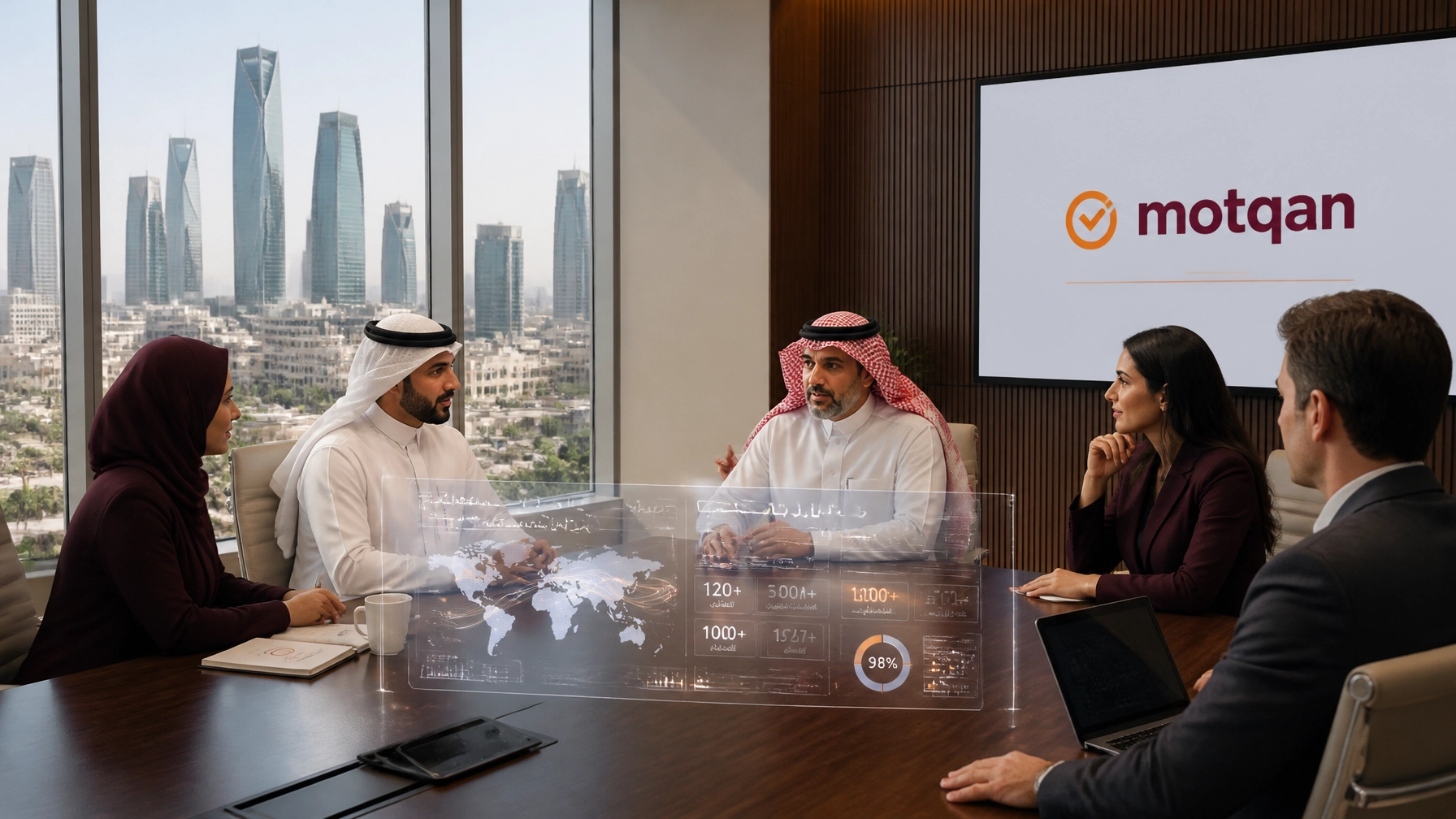
Look at all the recent success stories around you. From the towering skyscrapers of the King Abdullah Financial District in Riyadh to the buzzing tech hubs of Dubai’s DIFC, a quiet revolution is happening. It isn’t just about what businesses are saying; it’s about how they are saying it across dozens of languages simultaneously.
Nowadays, having an efficient, high-speed language strategy is seen as a must for any enterprise or government entity aiming to stay relevant in the GCC. The days of waiting weeks for a manual translation of a 50-page legal document or a complex marketing campaign are over. The region is moving toward a new standard: AI translation workflows.
If you aren't yet talking about how to integrate AI into your multilingual communication, you are already behind. But don't worry, we’ve got you covered. In this guide, we’ll explore why the UAE and KSA are leading the global charge in AI translation Saudi Arabia, and how you can unlock this world of opportunities for your own organization.
The Vision 2030 Catalyst: Why Now?
The Middle East is currently the most exciting landscape for technological adoption. With initiatives like Saudi Arabia’s Vision 2030 and the UAE’s National AI Strategy 2031, the imperative need to digitize and scale has never been clearer.
Government ministries are under pressure to provide seamless, multilingual e-government services, while enterprises are racing to localize their offerings for a global audience. According to recent reports, over 80% of organizations in the Middle East feel intense pressure to adopt AI, and for good reason. AI doesn’t just "translate"; it empowers. It enables a Saudi firm to launch a product in 10 countries in the time it used to take to launch in one.

By accelerating Vision 2030 goals, AI-powered translation is no longer a luxury, it is the backbone of regional expansion.
Beyond Simple Machine Translation: The "Workflow" Era
When people hear "AI translation," they often think of a simple text box where you paste a sentence and get a rough result. That isn't what the buzz in Riyadh and Dubai is about. The conversation has shifted toward AI translation workflows.
An AI workflow is a holistic set of automated steps that take a project from its raw source to a polished, culturally accurate final product. It involves:
- Automated Routing: Choosing the right AI model for the specific subject matter.
- Multi-LLM Intelligence: Using multiple Large Language Models to compare and optimize the output.
- Terminology Management: Ensuring your brand’s specific voice is never lost.
- Human-in-the-Loop (HITL): Expert linguists providing the final cultural "soul."
Would you like your customers to interact with a brand that sounds like a robot, or one that speaks their local dialect with precision? This is why Arabic business translation requires more than just code; it requires a workflow that understands context.
Solving the Terminology Trap
One of the biggest terminology management challenges in the GCC is consistency. Imagine a major bank in the UAE using three different Arabic terms for "interest rate" across its website, mobile app, and legal contracts. It creates confusion, erodes trust, and looks unprofessional.
In high-stakes industries like finance, legal, and government, precision is non-negotiable. Modern AI workflows solve this by integrating dynamic glossaries. These systems ensure that every time your brand name or a technical term appears, it is translated exactly the same way, every time. You can learn more about how to stop brand inconsistency here.

The Motqan Advantage: Why Multi-LLM is the Game Changer
At Motqan, we recognized early on that no single AI model is perfect for every task. One might be excellent at creative marketing copy, while another excels at technical legal jargon.
This is why Motqan’s platform is built on a multi-LLM translation engine. By leveraging the strengths of several top-tier models, we provide a level of accuracy that a single-model approach simply cannot match.
The result? Our clients are seeing their translation processes move 60% faster. That is the difference between missing a tender deadline and winning a multi-million dollar contract. Look at why early adopters are scaling 60% faster in the GCC today.
Dazzle Your Audience with Cultural Precision
While AI provides the speed, human intelligence provides the nuance. This is particularly vital for business localization Saudi Arabia. The Arabic language is rich with dialects, cultural sensitivities, and religious context.
Is this picture appropriate? Does this idiom make sense in a Riyadh boardroom? Is the tone too casual for a government official?

Thanks to Motqan’s human-in-the-loop quality assurance, we ensure that the final output lands exactly as intended. We bridge the gap between machine efficiency and human empathy. If you’re wondering whether you still need that human touch, we’ve uncovered the truth here.
How to Unlock the Power of AI Workflows in Your Organization
Ready to boost your efficiency and expand your reach? Here is how you can begin your journey:
- Audit Your Current Process: How long does it take to get a document translated? If it's more than 48 hours for standard content, you need an AI workflow.
- Define Your Glossary: Don't let your brand voice be left to chance. Start building a terminology database.
- Choose the Right Partner: Don't settle for a generic tool. Partner with a platform that understands the GCC market and offers a holistic Arabic business translation solution.
- Avoid Common Pitfalls: Don't make the same mistakes others have. Read our guide on the 7 mistakes to avoid in Saudi business localization.
Reap the Rewards of a Multilingual Future
The world is watching the UAE and KSA. As these nations become global hubs for investment and innovation, the ability to communicate across borders instantly is your greatest competitive advantage.
Evolve your communication strategy today. Unlock the power of AI workflows. Partner with Motqan, where AI meets human intelligence, in every language.

Frequently Asked Questions
1. Is AI translation safe for sensitive government data?
Yes, provided you use an enterprise-grade platform like Motqan. We prioritize data residency and security protocols that comply with regional regulations, ensuring your data never leaves a secure environment.
2. Can AI handle the different dialects of Arabic used in the GCC?
Standard AI often struggles with dialects, but Motqan’s multi-LLM approach and human-in-the-loop workflow ensure that the translation is adapted to the specific regional nuance required, whether it’s for a Saudi, Emirati, or international audience.
3. How much faster is an AI workflow compared to traditional translation?
On average, Motqan users report a 60% reduction in turnaround time. What used to take a week can now be completed in a matter of days, or even hours, without sacrificing quality.
4. What is "Terminology Management"?
It is the process of creating and maintaining a database of approved terms (glossaries) to ensure consistency across all your translated content. This prevents "The Terminology Trap" where different translators use different words for the same concept.

